Mirror Tracer
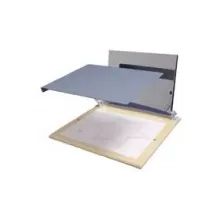
The Mirror Tracer is a classic assessment and training device used to evaluate visual-motor coordination, motor learning, concentration, and perceptual adaptation. The task requires the subject to trace a star-shaped pattern while viewing their hand movements only through a mirror, forcing them to reverse normal visual cues and adapt to altered visual feedback.
During the test, the subject traces the mirrored star pattern onto paper while a shield prevents direct observation of their hand. This creates a challenging task that measures the ability to learn and perform movements under reversed visual conditions.
For convenience and portability, both the mirror and shield fold down flat for easy storage when not in use.
Typical Applications
- Psychology and behavioural science studies
- Motor learning research
- Perceptual-motor coordination assessment
- Educational demonstrations and teaching
- Neurological and cognitive research
- Human performance studies
- Occupational therapy and rehabilitation training
- Learning and skill acquisition experiments
What the Test Measures
- Hand-eye coordination
- Fine motor control
- Visual-motor integration
- Learning rate and skill acquisition
- Adaptation to reversed visual feedback
- Concentration and performance accuracy
Key Features
- Classic mirror tracing assessment tool
- Mirrored star tracing task
- Reversed visual feedback testing
- Shield prevents direct view of the hand
- Foldable mirror and shield for compact storage
- Suitable for research, education, and training applications
- Durable and easy-to-use design
Typical Users
- Psychologists
- Researchers
- University teaching laboratories
- Occupational therapists
- Neuroscience researchers
- Human performance specialists
- Educational institutions
The Mirror Tracer is commonly used in psychology, neuroscience, motor learning, and educational settings to assess adaptation to reversed visual feedback. The following are typical protocols used to evaluate performance and learning.
1. Single-Trial Baseline Test
Objective: Assess initial visual-motor coordination and adaptation ability.
Procedure
- Seat the subject comfortably in front of the Mirror Tracer.
- Position the shield so the hand cannot be viewed directly.
- Instruct the subject to trace the star pattern while looking only at the mirror reflection.
- Record:
- Completion time
- Number of boundary crossings/errors
- Whether the tracing was completed
Outcome Measures
- Initial skill level
- Visual-motor coordination
- Adaptation difficulty
2. Motor Learning (Repeated-Trials) Test
Objective: Measure learning and improvement over time.
Procedure
- Perform 5-10 consecutive tracing trials.
- Allow a short rest period between trials.
- Record:
- Completion time for each trial
- Number of tracing errors
- Accuracy score
Outcome Measures
- Learning rate
- Improvement in accuracy
- Reduction in task completion time
- Skill acquisition patterns
Typical Result
Most subjects show:
- Faster completion times
- Fewer errors
- Improved tracing smoothness
3. Dominant vs Non-Dominant Hand Comparison
Objective: Compare motor performance between hands.
Procedure
- Complete the tracing task using the dominant hand.
- Repeat using the non-dominant hand.
- Record performance for each hand.
Outcome Measures
- Hand dominance effects
- Bilateral coordination differences
- Fine motor control variations
4. Fatigue and Attention Study
Objective: Examine the effects of fatigue or concentration on performance.
Procedure
- Complete a baseline trial.
- Introduce a period of sustained activity or cognitive workload.
- Repeat the tracing task.
- Compare results.
Outcome Measures
- Changes in error rate
- Changes in completion time
- Effect of fatigue on motor control
5. Rehabilitation Progress Assessment
Objective: Monitor recovery of motor function over time.
Procedure
- Establish baseline performance.
- Repeat testing at regular intervals during rehabilitation.
- Compare results across sessions.
Outcome Measures
- Improvement in coordination
- Reduction in errors
- Improvement in movement control
- Functional recovery trends
Typical Data Recording Sheet
| Trial | Time (sec) | Errors | Notes |
|---|---|---|---|
| 1 | 120 | 18 | Initial attempt |
| 2 | 105 | 14 | Improved control |
| 3 | 92 | 10 | Fewer boundary crossings |
| 4 | 85 | 7 | Increased confidence |
| 5 | 78 | 5 | Consistent tracing |
Common Performance Indicators
- Completion Time: How long it takes to complete the pattern
- Error Count: Number of times the tracing crosses the boundaries
- Learning Rate: Improvement between trials
- Accuracy: Degree of conformity to the traced pattern
- Consistency: Ability to maintain performance across repeated tests
These protocols make the Mirror Tracer a valuable tool for studying motor learning, visual-motor integration, hand-eye coordination, perceptual adaptation, and rehabilitation outcomes.
Choose S.I. Instruments for precision you can trust, compliance you can rely on, and service that delivers confidence.