Manual Handling Force & Torque Testing Solutions
This brochure provides an overview of Force and Torque Testing Solutions for Manual Handling Applications, helping organisations assess workplace tasks, improve safety, and reduce the risk of musculoskeletal injuries.
Using force measurement equipment and manual handling assessment tools, employers, ergonomists, and rehabilitation professionals can objectively evaluate the physical demands of workplace activities and compare them against employee capabilities.
Typical Applications
Accessibility Assessments
Measure the forces required to operate:
- Doors and gates
- Windows and access points
- Controls and handles
- Public access equipment
Functional Capacity Evaluations (FCE)
Objectively assess an individual’s ability to perform work-related activities, including:
- Lifting
- Carrying
- Pushing
- Pulling
- Repetitive tasks
Physical Work Evaluations
Determine the physical demands of specific job tasks and compare them against worker capabilities to support safe job placement and return-to-work programs.
Rehabilitation Assessments
Monitor patient recovery and evaluate strength, endurance, and work readiness following injury, illness, or surgery.
Job Task Evaluation
Measure the actual forces required to perform workplace activities and identify tasks that may present a risk of injury or excessive physical strain.
Ergonomic Risk Analysis
Identify potential ergonomic hazards by measuring workplace forces and assessing:
- Repetitive movements
- Awkward postures
- Excessive exertion
- Manual handling risks
Key Benefits
- Objective measurement of workplace forces
- Supports injury prevention programs
- Improves workplace safety and ergonomics
- Assists with compliance and risk management
- Supports return-to-work and rehabilitation programs
- Helps optimise workplace design and processes
- Provides data-driven decision making for health and safety initiatives
Typical Users
- Ergonomists
- Occupational Therapists
- Physiotherapists
- Workplace Health & Safety Officers
- Rehabilitation Consultants
- Occupational Health Professionals
- Functional Capacity Evaluators
- Human Factors Specialists
- Risk Management Consultants
Torque testing equipment is used to measure the rotational force required to tighten, loosen, operate, or break components. The choice of equipment depends on the application, torque range, and level of accuracy required.
Manual Torque Testers
Manual torque testers are commonly used for routine quality control and production testing.
Typical Equipment:
- Mecmesin Orbis Torque Tester
- Mecmesin Tornado Digital Torque Tester
- Mecmesin Helixa Torque Tester (for low-torque applications)
Typical Applications:
- Bottle cap opening and closing torque
- Tamper-evident closure testing
- Medical device assemblies
- Cosmetic packaging
- Small precision components
Motorised Torque Testers
Motorised systems provide controlled speed and improved repeatability.
Typical Equipment:
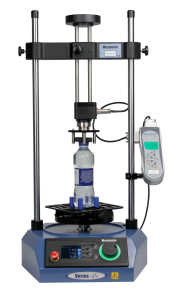
- Mecmesin Vortex-dV Torque Tester
Typical Applications:
- Closure torque testing
- Packaging validation
- Product development
- Quality control testing
- Batch testing and repeatability studies
Benefits:
- Consistent test speed
- Reduced operator influence
- Improved repeatability
- Greater productivity
Torque Sensors & Transducers
Torque sensors provide highly accurate torque measurement and can be integrated into test systems.
Typical Equipment:
- Mecmesin Smart Torque Sensors
- Kistler KiTorq® Torque Measurement System
Typical Applications:
- Test benches
- Industrial drives
- Automotive testing
- Research and development
- Rotating shaft measurements
Torque Test Fixtures & Accessories
Fixtures are essential for securely holding products during testing.
Examples:
- Bottle holders
- Custom cap holders
- Pouch holders
- Preform holders
- Special-purpose fixtures for irregular products
These accessories improve alignment, reduce slippage, and ensure repeatable results.
Digital Torque Indicators
Portable indicators can be used with external torque transducers.
Typical Equipment:
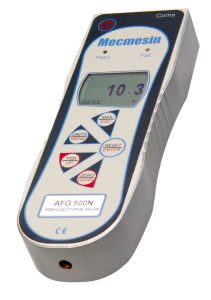
- Mecmesin AFTI (Advanced Force & Torque Indicator)
Applications:
- Portable torque measurement
- Laboratory testing
- Production inspections
- Field measurements
Torque Wrench Calibration Equipment
Used to verify and calibrate:
- Torque wrenches
- Torque screwdrivers
- Assembly tools
These systems help maintain compliance and measurement traceability.
Common Torque Testing Applications
- Screw cap torque testing
- Tamper-evident closure testing
- Pouch and preform closure testing
- Medical device assembly testing
- Automotive component testing
- Bottle packaging validation
- Valve and control knob operation
- Torque tool calibration
- Industrial drive and shaft torque measurement
Key Considerations When Selecting Torque Testing Equipment
- Required torque range
- Product size and geometry
- Test speed requirements
- Accuracy and repeatability requirements
- Manual or automated operation
- Data collection and reporting needs
- Compliance with relevant industry standards
Choose S.I. Instruments for precision you can trust, compliance you can rely on, and service that delivers confidence.