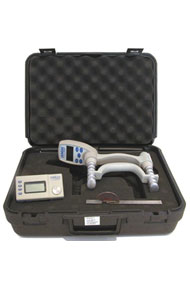
The Jamar Hand Evaluation Set combines three essential assessment tools into one convenient package, providing clinicians with a comprehensive solution for evaluating hand strength, pinch strength, and joint range of motion.
Ideal for rehabilitation, occupational therapy, physiotherapy, hand therapy, and clinical assessment, the set enables healthcare professionals to objectively measure hand function and monitor patient progress throughout treatment and recovery.
Included Instruments
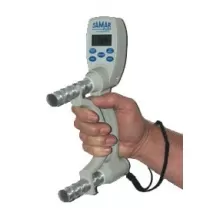
Jamar Digital Hand Dynamometer
Designed for the routine screening and evaluation of grip strength, providing accurate and repeatable measurements for assessing hand and forearm function.
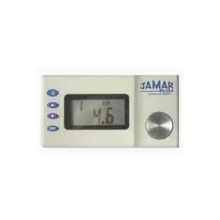
Jamar Digital Pinch Gauge
Provides precise measurement of pinch strength, including key pinch, tip pinch, and palmar pinch assessments. Ideal for evaluating thumb and finger function and monitoring rehabilitation progress.
Jamar 5½” Finger Goniometer
Used for measuring the range of motion of:
- Metacarpal joints
- Phalangeal joints
- Interphalangeal joints
Its compact design allows quick and easy measurement of finger and hand joint movement.
Typical Applications
- Hand injury assessment and rehabilitation
- Occupational and physical therapy
- Post-surgical recovery monitoring
- Arthritis and joint mobility evaluation
- Functional capacity evaluations
- Sports medicine
- Clinical research and patient outcome tracking
Key Benefits
- Complete hand assessment solution
- Objective measurement of grip and pinch strength
- Accurate finger joint range-of-motion evaluation
- Supports patient progress monitoring
- Ideal for clinical, rehabilitation, and research environments
- Trusted Jamar quality and reliability
The Jamar Hand Evaluation Set is widely used by healthcare professionals who require accurate and objective assessment of grip strength, pinch strength, and finger joint range of motion. By combining three essential hand assessment tools into a single package, it supports comprehensive evaluation and monitoring of hand function.
Hand Therapists
Specialist hand therapists use the set to assess:
- Hand and finger injuries
- Post-surgical recovery
- Tendon and nerve repairs
- Functional hand performance
Occupational Therapists
Occupational therapists rely on the set to evaluate a patient’s ability to perform everyday activities and monitor improvements in hand strength and mobility during rehabilitation.
Physiotherapists
Physiotherapists use the instruments to:
- Measure grip and pinch strength
- Assess joint mobility
- Track rehabilitation progress
- Evaluate upper-limb function following injury
Orthopaedic Surgeons & Clinics
Used before and after treatment to document:
- Hand and wrist conditions
- Surgical outcomes
- Recovery from fractures and joint reconstruction procedures
Sports Medicine Professionals
Athletes often require detailed assessment of hand strength and function following injury. The set helps monitor recovery and guide return-to-sport decisions.
Rehabilitation Centres
Rehabilitation teams use the Jamar Hand Evaluation Set to provide objective measurements that support treatment planning and ongoing patient monitoring.
Occupational Health Professionals
Useful for:
- Functional capacity evaluations
- Workplace injury assessments
- Return-to-work programs
- Impairment evaluations
Researchers & Educators
Universities, research institutions, and teaching hospitals use the set for:
- Clinical studies
- Data collection
- Student training
- Outcome measurement research
Key Benefits for Users
- Comprehensive assessment of hand function
- Objective and repeatable measurements
- Supports evidence-based treatment decisions
- Ideal for patient progress monitoring
- Trusted and widely recognised Jamar instruments
- Suitable for clinical, rehabilitation, occupational, and research environments
The Jamar Hand Evaluation Set combines three instruments to provide a complete assessment of hand function: grip strength, pinch strength, and joint range of motion. Together, they help clinicians establish a baseline, monitor progress, and evaluate treatment outcomes.
Step 1: Assess Grip Strength
Instrument: Jamar Digital Hand Dynamometer
The patient holds the dynamometer with the arm positioned according to the testing protocol being used. The patient is instructed to squeeze the handle as hard as possible for a few seconds.
The dynamometer displays the maximum grip force and can store multiple readings for comparison. Typically, several trials are performed and averaged to establish a reliable measure of grip strength.
Used to evaluate:
- Overall hand strength
- Recovery following injury or surgery
- Functional capability
- Rehabilitation progress
Step 2: Measure Pinch Strength
Instrument: Jamar Digital Pinch Gauge
The patient performs one or more pinch tests using the thumb and fingers:
- Tip Pinch: thumb to fingertip
- Key Pinch: thumb against the side of the index finger
- Palmar (Three-Point) Pinch: thumb, index, and middle finger
The pinch gauge records the maximum force generated during each test, providing objective measurements of thumb and finger strength.
Used to evaluate:
- Fine motor function
- Thumb and finger strength
- Tendon and nerve recovery
- Hand dexterity and function
Step 3: Evaluate Joint Range of Motion
Instrument: Jamar 5½” Finger Goniometer
The goniometer is aligned with the finger joints being assessed. The clinician measures the angle of movement at the:
- Metacarpophalangeal (MCP) joints
- Proximal interphalangeal (PIP) joints
- Distal interphalangeal (DIP) joints
Measurements are recorded in degrees and compared with previous results or expected ranges of motion.
Used to evaluate:
- Joint mobility
- Post-surgical recovery
- Contractures and stiffness
- Arthritis-related limitations
- Functional movement
Typical Assessment Workflow
- Record the patient’s baseline information.
- Measure grip strength using the dynamometer.
- Measure pinch strength using the pinch gauge.
- Assess finger joint range of motion using the goniometer.
- Document results and compare them with previous assessments.
- Use the data to guide treatment planning and monitor progress over time.
Benefits of Using the Complete Set
- Comprehensive assessment of hand function
- Objective and repeatable measurements
- Easy tracking of rehabilitation progress
- Supports evidence-based clinical decisions
- Suitable for rehabilitation, occupational therapy, sports medicine, and research
To achieve accurate, repeatable, and clinically meaningful results, it is important to use each instrument consistently and follow established testing protocols.
1. Jamar Digital Hand Dynamometer
Patient Positioning
For standard grip strength testing, the patient should ideally be seated with:
- Shoulder adducted and neutrally rotated
- Elbow flexed at 90°
- Forearm in a neutral position
- Wrist slightly extended
Maintaining a consistent position between tests improves repeatability.
Testing Technique
- Ensure the handle is adjusted to the appropriate grip position for the patient’s hand size.
- Instruct the patient to squeeze as hard as possible for 3 to 5 seconds.
- Encourage maximum effort without jerking or sudden movements.
- Conduct three trials on each hand where required by your protocol.
Best Practice
- Allow a short rest period between tests to minimise fatigue.
- Test the same hand in the same position each time.
- Compare results against previous assessments rather than relying solely on a single measurement.
Common Mistakes to Avoid
- Allowing body movement to assist the squeeze.
- Testing with different handle positions between sessions.
- Measuring immediately after strenuous hand activity or therapy.
2. Jamar Digital Pinch Gauge
Pinch Types to Test
Key Pinch
- Thumb presses against the side of the index finger.
- Commonly used to assess functional pinch strength for everyday tasks.
Tip Pinch
- Thumb presses against the tip of the index finger.
- Evaluates fine motor control and fingertip strength.
Three-Point (Palmar) Pinch
- Thumb opposes the index and middle fingers.
- Frequently used for functional hand assessments.
Testing Technique
- Position the pinch gauge appropriately for the pinch type being tested.
- Ask the patient to squeeze gradually until maximum force is achieved.
- Hold the effort briefly before releasing.
Best Practice
- Test pinch types separately.
- Record multiple trials and average the results.
- Use consistent hand positioning throughout all patient visits.
Common Mistakes to Avoid
- Allowing grip assistance from the remaining fingers.
- Inconsistent finger placement on the gauge.
- Leaning or using body weight to assist force generation.
3. Jamar 5½” Finger Goniometer
Alignment Tips
Proper alignment is critical for accurate measurements:
- Place the goniometer pivot over the joint’s axis of motion.
- Align one arm with the stationary segment.
- Align the other arm with the moving segment.
Measuring Finger Joints
MCP Joint
Measure movement between the metacarpal and proximal phalanx.
PIP Joint
Measure movement between the proximal and middle phalanx.
DIP Joint
Measure movement between the middle and distal phalanx.
Best Practice
- Measure both active and passive motion if clinically relevant.
- Position the hand consistently between sessions.
- Record the exact joint tested and whether flexion or extension was measured.
Common Mistakes to Avoid
- Misaligning the goniometer axis.
- Reading the wrong scale.
- Allowing adjacent joints to move during measurement.
Getting the Most from the Complete Hand Evaluation Set
When used together, the three instruments provide a comprehensive assessment of hand function:
| Instrument | Measures |
|---|---|
| Jamar Digital Hand Dynamometer | Gross grip strength |
| Jamar Digital Pinch Gauge | Thumb and finger pinch strength |
| Jamar Finger Goniometer | Joint range of motion |
A typical assessment sequence is:
- Measure finger and thumb range of motion.
- Assess pinch strength.
- Complete grip strength testing.
- Record and compare results with previous evaluations.
Following the same procedure at each appointment helps clinicians accurately monitor rehabilitation progress, treatment effectiveness, and functional recovery.
Choose S.I. Instruments for precision you can trust, compliance you can rely on, and service that delivers confidence.